Vous devez activer les cookies pour accéder à ce site.

About the event

Bienvenue Québec is a must-attend bilingual event for the Quebec tourism industry, group and individuals.

Created in 1989 by the Bus Carriers Federation, Bienvenue Québec is an annual business event featuring a “speed meeting” concept dedicated to tourism. Its dynamic format allows suppliers of tourism products and services to efficiently meet key decision-makers—travel agencies, receptive agencies, and tour operators—during ten-minute appointments scheduled through the event platform. The goal is simple yet powerful: to attract and integrate their destinations into the travel itineraries of these market influencers.

Event Objectives

  • Alolow buyers to meet suppliers of tourism products and services from Québec, Ontario, the Atlantic provinces, and the United States during three days of scheduled activities.
  • Offer training, networking, and promotional opportunities for Québec’s tourism businesses, contributing to the visibility and vitality of Quebec’s tourism industryy.
  • Showcase Québec’s must-see attractions on a global scale.

In addition to serving as a hub for business development in Québec’s tourism industry, Bienvenue Québec strengthens the province’s reputation as a high-quality, authentic, and attractive travel destination.

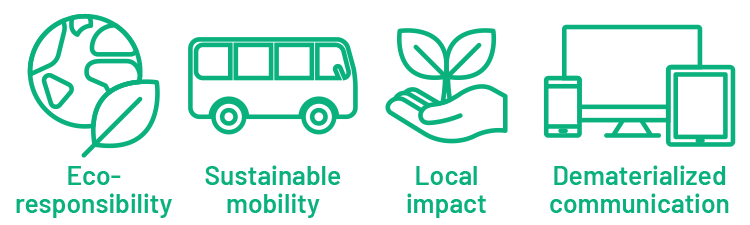
Bienvenue Québec is committed to minimizing the ecological footprint of its event.


Our eco-responsible commitment

Together for a greener event. Choose sustainable mobility and digital exchanges to reduce our impact on the environment.

  • Improving accessibility: Implementation of a bus shuttle service, provided by members of the Bus Carriers Federation, between Lévis and Rivière-du-Loup to access the event site. This service is free and available to all, upon registration.
  • Encouraging the use of intercity transportation: Promoting collective mobility throughout Quebec to reduce the number of individual trips.
  • Prioritizing proximity of accommodations: Selection of accommodations located within 5 km of the event site to facilitate travel on foot or by public transportation.
  • Promoting dematerialization: Using an online platform to manage the event, share information with participants, and limit the printing of paper documents (such as appointments schedules).
  • The chosen site must demonstrate concrete eco-responsible practices.
  • Prioritizing digital tools and reusable infrastructure: Reducing the use of printed materials and choosing reusable physical structures for the event.
  • Installing water stations: Providing pitchers to replace plastic bottles.
  • Encouraging local and sustainable purchasing: Acquiring local, organic, or fair-trade products to support the regional economy while minimizing environmental impact.
  • Enhancing the region’s attractiveness: Contributing to the economic development of the host region, making the event a key player in local tourism and attracting national and international participants each year.